Accumulator Boost Mechanics: Bridging Free Bet Incentives with Multi-Event Wagering Tactics
Casey Coleman · Sep 4, 2026
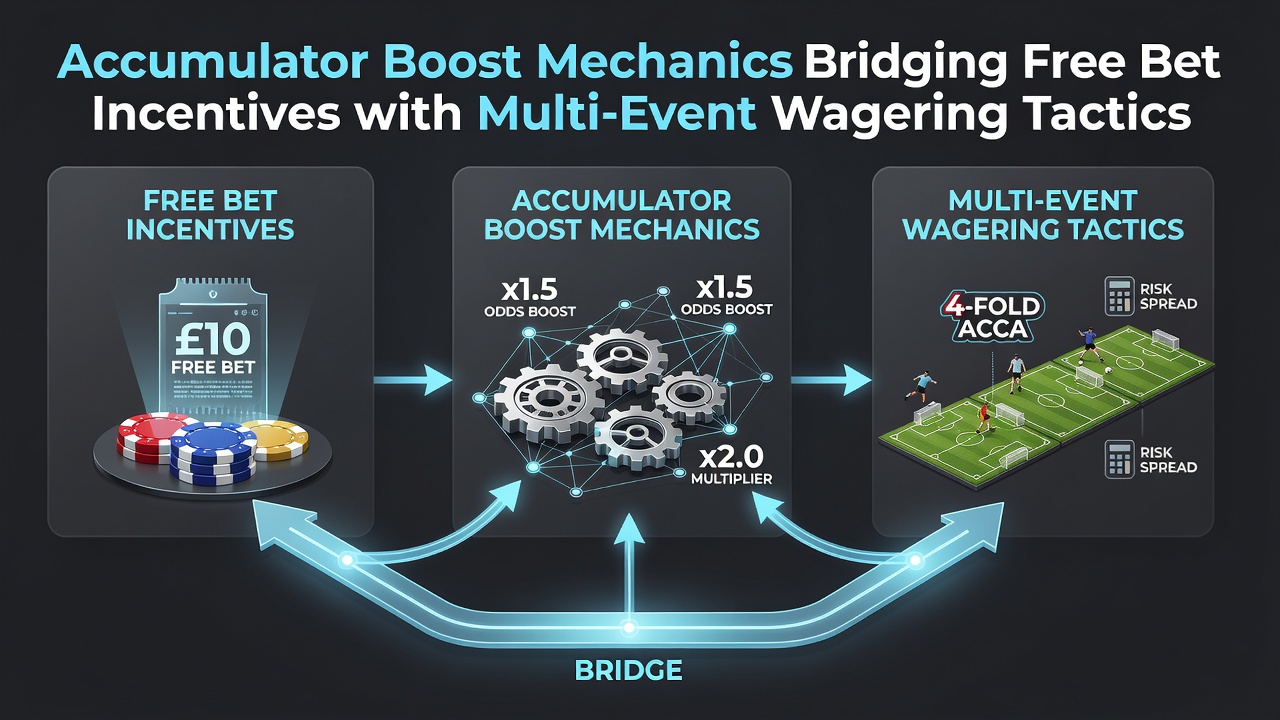
Accumulator Boost Mechanics: Bridging Free Bet Incentives with Multi-Event Wagering Tactics
Accumulator boost mechanics operate as structured promotions that combine enhanced odds or payouts on multi-leg bets with free bet credits issued by operators. These systems allow users to apply standard free bet allocations across several events while receiving automatic adjustments to the final return when certain conditions are met. Data from industry reports shows that operators track participation rates through specific codes that activate the boost layer once the free bet stake is placed on an accumulator.
Core Components of Accumulator Boost Systems
Operators define accumulator boosts through fixed parameters that include minimum leg counts, eligible markets, and boost percentages applied to the total odds. A typical setup requires at least four selections from different events, with the boost activating only after the free bet settles as a winner. Researchers at the University of Nevada's gaming studies program have documented how these parameters create measurable differences in payout structures compared to standard accumulator calculations.
Free bet incentives function as the entry point because they provide the initial stake without requiring additional user funds. Once the free bet is used on the multi-event wager, the boost mechanic recalculates the settlement amount according to predetermined multipliers. Figures from the American Gaming Association reveal that such combined offerings appear most frequently during periods of high fixture density, including September 2026 when multiple leagues overlapped in scheduling.
Integration Patterns Between Free Bets and Multi-Event Wagers
Operators link the two elements by requiring the free bet to cover the full accumulator stake before any boost applies. This connection ensures that promotional credits flow directly into longer ticket constructions rather than single-event placements. Observers note that the process often involves automated validation at the point of bet placement, where the system checks both the free bet balance and the number of legs selected.
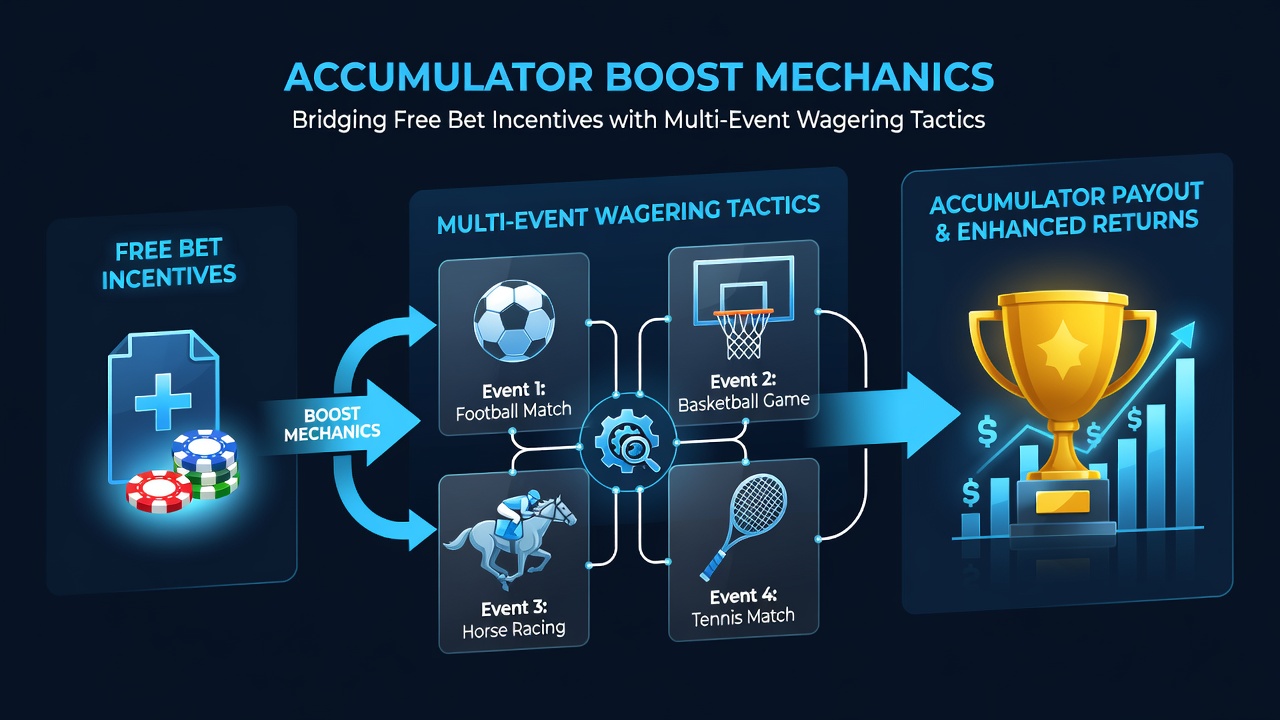
Multi-event wagering tactics gain additional layers when boosts scale with leg count. For instance, a four-leg accumulator might receive a 10 percent uplift while a six-leg ticket qualifies for 25 percent, creating progressive incentives that encourage larger combinations. Studies conducted by the Canadian Gaming Association indicate that these graduated structures appear consistently across major platforms and correlate with increased average stake sizes per ticket.
Operational Mechanics During Settlement
Settlement occurs once all legs resolve, at which point the system applies the boost multiplier to the free bet winnings before crediting the account. Any voided or pushed legs trigger recalculation rules that maintain the remaining selections as a new accumulator base. Those who monitor these processes report that operators publish detailed terms covering edge cases such as abandoned events or market withdrawals to prevent disputes.
September 2026 schedules featured extended international breaks that operators used to refresh accumulator boost campaigns. Regulatory filings from multiple jurisdictions show these campaigns maintained consistent eligibility criteria across desktop and mobile interfaces, ensuring the same boost percentages applied regardless of access method. External data sources confirm that such timing aligns with peak fixture volumes rather than isolated events.
Comparative Structures Across Markets
Regional variations emerge when operators adapt boost percentages to local betting preferences. Markets with heavy focus on football accumulators often emphasize leg-count scaling, whereas those with broader sports coverage incorporate cross-sport combinations under the same boost umbrella. The Australian Institute of Gambling Research has published findings that highlight how these adaptations maintain core mechanical consistency even as surface rules differ.
Users frequently combine accumulator boosts with other active promotions provided the terms permit stacking. Verification steps at placement confirm whether the free bet qualifies for the boost layer independently of any additional offers. This modular approach allows operators to run parallel campaigns without altering the underlying accumulator calculation engine.
Conclusion
Accumulator boost mechanics continue to serve as a defined bridge between free bet incentives and multi-event wagering by enforcing clear eligibility rules and automated settlement adjustments. Available data from regulatory bodies and academic sources demonstrates consistent structural patterns across operators while allowing regional customization. These systems rely on transparent parameters that govern leg minimums, boost scaling, and free bet integration to produce predictable outcomes for participants.